The ketogenic diet doesn’t mean avoiding restaurants entirely. Greek cuisine, with its emphasis on fresh vegetables, olive oil, and grilled meats, offers several keto-friendly options. You’ll need to navigate around bread, rice, and some sauces, but with the right choices, you can enjoy a Mediterranean meal without breaking ketosis.
Starters and Mezze
Begin with olives, which are naturally low in carbs and high in healthy fats. A typical serving of Kalamata olives (about 50g) contains just 3g net carbs. Tzatziki, made with Greek yoghurt, cucumber, and garlic, is another good choice – just avoid the pita bread it usually comes with. Grilled halloumi or feta cheese drizzled with olive oil makes for a satisfying starter. keto-friendly cheese options can help when choosing dairy.
Main Courses
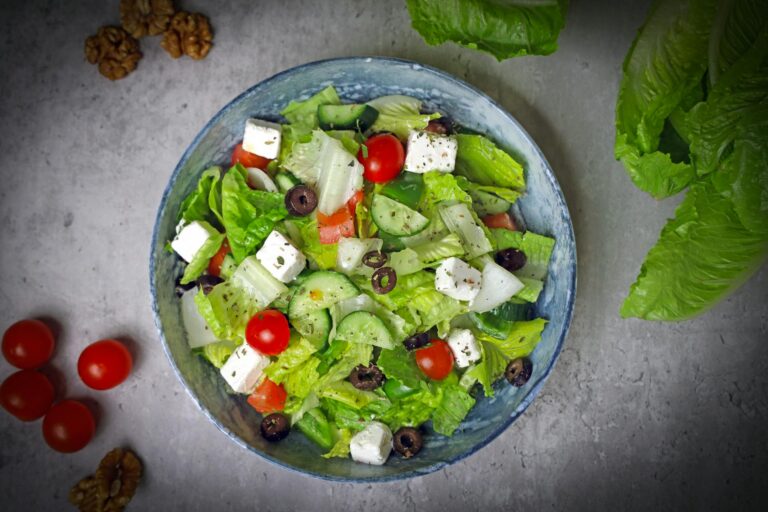
Stick to grilled meats like souvlaki (skewered pork or chicken) or lamb chops. These are typically served with lemon and herbs rather than sugary marinades. Avoid dishes like moussaka, which contains potatoes and béchamel sauce. A Greek salad without the croutons is a safe bet – ask for extra feta and olive oil to boost the fat content. At around £14 for a mixed grill platter at most mid-range Greek restaurants, you’re getting a protein-rich meal with minimal carbs.
What This Means in Practice
In the UK, chains like The Real Greek and smaller independent tavernas will accommodate requests to substitute chips or rice with extra vegetables. A typical portion of grilled octopus with lemon and olive oil costs about £12-£16 in London. Sainsbury’s sells pre-marinated pork souvlaki skewers for £3.50, useful for recreating the experience at home. During summer months, many Greek restaurants offer outdoor seating – perfect for enjoying a keto meal al fresco.
Sauces and Dressings
Be cautious with sauces. Taramasalata, a fish roe dip, often contains breadcrumbs. Instead, opt for skordalia made with garlic and almonds rather than potatoes. Dress salads with simple olive oil and vinegar rather than honey-based dressings. Research shows that monounsaturated fats like olive oil may support metabolic health (Volek JS, Phinney SD, 2008).
Desserts and Drinks
Greek coffee is keto-friendly if taken without sugar. Avoid baklava and other syrup-soaked pastries. Some restaurants offer grilled halloumi with a drizzle of honey – ask for it plain. If you’re craving something sweet after your meal, a few fresh berries with double cream (available at Tesco for £1.20 per 300ml) can satisfy without the carb load.
Frequently Asked Questions
Can I eat dolmades on keto?
Traditional dolmades (stuffed vine leaves) contain rice, making them too high in carbs. Some restaurants offer meat-only versions – always ask.
Is hummus allowed on keto?
While chickpeas are higher in carbs than ideal, a small portion (1-2 tbsp) of hummus may fit some people’s macros, especially if you account for it in your daily carb limit.
What about Greek yoghurt?
Full-fat Greek yoghurt in moderation (about 100g) contains around 4g net carbs. It’s better than regular yoghurt but still requires portion control.
The Bottom Line
Greek restaurants offer numerous keto-friendly options if you focus on grilled meats, cheeses, and olive oil-based dishes. Avoid obvious carbs like bread and rice, and don’t hesitate to ask for substitutions. Many traditional Greek flavours align well with low-carb eating. If you’d rather not do the macro maths yourself, the Keto Dieting app does it for you on Google Play and the App Store.
References
- Volek JS, Phinney SD, Forsythe CE, et al. (2008). Carbohydrate restriction has a more favorable impact on the metabolic syndrome than a low fat diet. Lipids. https://doi.org/10.1007/s11745-008-3274-2
- Paoli A, Rubini A, Volek JS, Grimaldi KA (2013). Beyond weight loss: a review of the therapeutic uses of very-low-carbohydrate (ketogenic) diets. European Journal of Clinical Nutrition. https://doi.org/10.1038/ejcn.2013.116