

The Ultimate Aldi Keto Shopping List for 2026
Aldi has become a reliable source for ketogenic diet staples across the UK. The ketogenic diet requires careful food selection—you need fats, moderate protein, and minimal carbohydrate—and Aldi’s own-brand range now makes this easier and cheaper than ever before. This guide covers exactly what to buy, where to find it, and what to avoid.
Why Aldi Works for Keto
Aldi’s strength lies in three areas: competitive pricing on animal proteins, a solid range of full-fat dairy, and increasingly, low-carb vegetables. Unlike some supermarkets, Aldi stocks double cream, full-fat Greek yoghurt, and eggs at prices that make a ketogenic diet sustainable long-term. Their own-brand products carry no premium markup, and the range has expanded significantly since 2024.
The ketogenic diet works by shifting your body into ketosis—a metabolic state where fat becomes your primary fuel source instead of carbohydrate. To reach and maintain ketosis, you need to keep daily carbohydrate intake below roughly 50 grams for most people. Aldi’s product labelling is clear and consistent, making it straightforward to count macros. You’ll find nutritional information on every item, and staff can usually direct you to lower-carb alternatives if you ask.
One practical advantage: Aldi’s stores are smaller than Tesco or Sainsbury’s, so you spend less time searching. The frozen section is particularly strong for keto—frozen broccoli, cauliflower, and Brussels sprouts are cheaper than fresh and last longer.
Proteins and Fats: The Foundation
Your Aldi basket should start here. Eggs are non-negotiable: Aldi’s own-brand free-range eggs cost around £1.80 per dozen, making them the cheapest protein source available. Buy two or three boxes per shop.
Meat and fish: Aldi stocks beef mince (5% fat) at roughly £3.50 per 500 g, chicken thighs at £2.20 per 500 g, and salmon fillets at £4.80 per 200 g. Thighs are preferable to breast meat on keto because they contain more fat and are more forgiving to cook. Bacon—specifically their unsmoked back bacon—runs about £2.00 per 200 g and is an easy breakfast staple.
Dairy fats are essential. Double cream (Aldi’s own brand, 48% fat) costs £1.20 per 300 ml. Butter (salted or unsalted) is around £1.50 per 250 g. Full-fat Greek yoghurt (10% fat) is £1.10 per 150 g—use sparingly as it still contains carbohydrate, but it’s useful for sauces and occasional desserts.
Cheese: Aldi’s cheddar blocks (mature or mild) are £2.00 per 400 g. Mozzarella is £1.80 per 250 g. Both are zero-carb and highly satiating. Buy whichever you prefer; cheese is a reliable keto staple.
Oils: Extra virgin olive oil (Aldi’s own, 500 ml) is £1.50. Coconut oil (organic, 500 ml) is around £3.00. Both are keto-friendly, though coconut oil is optional—olive oil works fine for cooking at moderate temperatures.
Vegetables: What to Buy and What to Skip
Not all vegetables are keto-appropriate. Aldi’s frozen broccoli florets (500 g) cost £0.89 and contain roughly 3 g net carbohydrate per 100 g serving. Cauliflower rice (frozen, 500 g) is £1.20 and similar. These are your workhorses—buy several bags.
Fresh vegetables: Spinach (200 g bag, £0.99) is nearly zero-carb and excellent raw or cooked. Lettuce (iceberg or romaine, £0.60–£0.80 per head) is a salad base. Courgettes (£0.50 each) contain about 2 g net carb per 100 g and work well grilled or spiralised. Mushrooms (200 g, £1.20) are roughly 1 g net carb per 100 g and add umami to dishes.
Avoid: potatoes, sweet potatoes, carrots (too much sugar), parsnips, and most root vegetables. Aldi stocks these, but they’re not keto-friendly. Corn is also off-limits—it’s essentially sugar.
Seasonal note: In winter (December to February), fresh vegetables are pricier and less varied. Frozen options become even more valuable. Spring (March to May) brings courgettes and leafy greens at better prices.
Nuts, Seeds, and Condiments
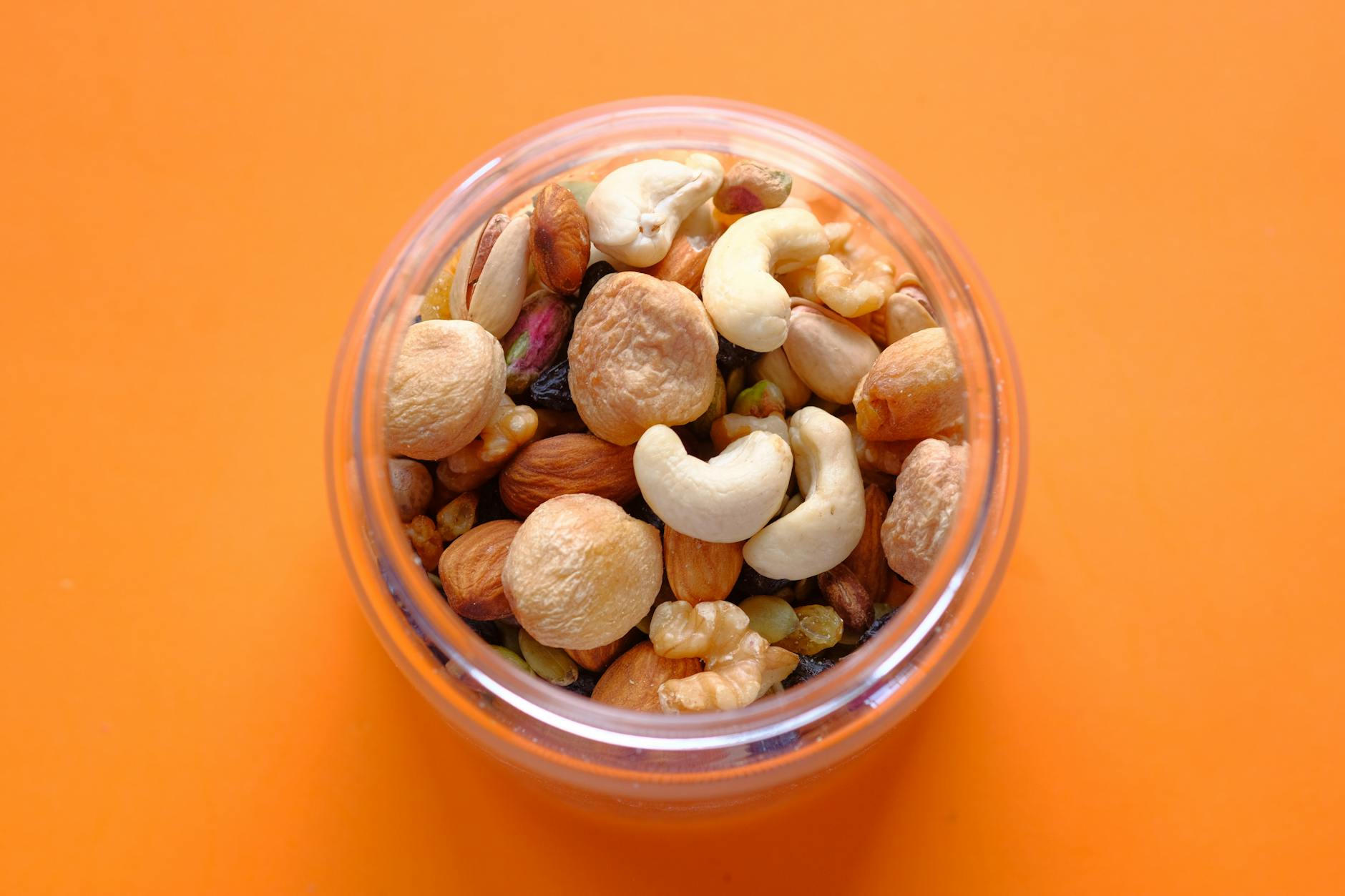
Aldi’s own-brand mixed nuts (200 g, £1.50) are useful for snacking, though portion control matters—nuts are calorie-dense. Almonds (150 g, £2.00) are lower-carb than cashews.
Seeds: Chia seeds (200 g, £1.80) and flaxseeds (250 g, £1.60) add fibre and omega-3s. Both are keto-friendly in small quantities.
Condiments: Mayonnaise (Aldi’s own, 500 ml, £0.99) is zero-carb and useful for dressings. Mustard (yellow or wholegrain, £0.50) is fine. Soy sauce (200 ml, £0.60) contains negligible carb. Avoid ketchup and most sauces—they’re loaded with sugar.
Salt and seasoning: Buy a good sea salt (Aldi’s own, 500 g, £0.40) and stock up on black pepper, garlic powder, and dried herbs. These cost very little and transform plain foods.
What This Means in Practice
A typical Aldi keto shop for one person, one week, might look like this:
- 2 dozen eggs: £3.60
- 1 kg chicken thighs: £4.40
- 500 g beef mince: £3.50
- 200 g bacon: £2.00
- 300 ml double cream: £1.20
- 250 g butter: £1.50
- 400 g cheddar: £2.00
- 3 × 500 g frozen broccoli: £2.67
- 500 g frozen cauliflower rice: £1.20
- 200 g spinach: £0.99
- 1 courgette: £0.50
- 200 g mushrooms: £1.20
- Olive oil, salt, pepper (already stocked): £0.00
Total: approximately £24.76 for seven days of meals for one person. This assumes two meals per day (skipping breakfast or combining breakfast and lunch as one meal—common on keto). If you eat three meals daily, add another £8–£10.
This cost is significantly lower than shopping at Tesco or Sainsbury’s for the same items. Aldi’s pricing advantage is real and compounds over months.
Research into very-low-carbohydrate ketogenic diets shows that weight loss and metabolic improvements occur within weeks when carbohydrate intake drops below 50 g daily. Aldi’s product range makes this achievable without premium spending.
Tracking Macros and Staying Consistent
Once you’ve filled your basket, the next step is understanding portions. A typical keto day might look like:
- Breakfast: 3 eggs fried in butter (21 g fat, 18 g protein, 1 g carb)
- Lunch: 150 g chicken thigh with 100 g broccoli and olive oil (18 g fat, 28 g protein, 3 g carb)
- Dinner: 150 g salmon with 100 g spinach sautéed in cream (25 g fat, 25 g protein, 2 g carb)
- Snack: 30 g almonds (15 g fat, 6 g protein, 3 g carb)
Daily totals: 79 g fat, 77 g protein, 9 g net carbohydrate.
This is a sustainable ketogenic ratio for most people. The exact macros depend on your body weight, activity level, and goals—there’s no universal formula. However, the principle is consistent: prioritise fat and protein, keep carbohydrate minimal.
Tracking becomes easier with macro tracking apps and tools, which let you log Aldi products by barcode. Many of Aldi’s own-brand items are already in major food databases, so scanning takes seconds.
Seasonal Buying and Storage
Aldi’s prices fluctuate with seasons. Winter (November to February) sees frozen vegetables at their cheapest—stock up. Spring (March to May) brings fresh produce price drops. Summer (June to August) is expensive for fresh items but frozen stocks remain stable. Autumn (September to October) is moderate across the board.
Storage strategy: Buy eggs and dairy weekly (they keep 2–3 weeks). Frozen vegetables last months. Meat can be frozen immediately if you won’t use it within two days. Cheese keeps 4–6 weeks in the fridge. Nuts and seeds should be kept in airtight containers away from heat.
Common Mistakes to Avoid
Don’t buy low-fat versions of anything. Aldi stocks low-fat yoghurt, low-fat cheese, and lean mince—all are keto traps. The fat has been removed and replaced with carbohydrate (usually sugar or starch). Stick to full-fat.
Don’t assume all Aldi own-brand products are keto-friendly. Their granola, breakfast cereals, and many “health” bars are high-carb. Always check the label. Carbohydrate content is listed per 100 g; divide by the serving size to get per-serving carbs.
Don’t skip the frozen section. Fresh is not inherently better on keto. Frozen broccoli and cauliflower are picked at peak ripeness and frozen immediately, preserving nutrients. They’re cheaper and last longer than fresh.
Don’t buy pre-made keto products (keto bread, keto bars, keto snacks) from Aldi. They’re expensive, often contain sugar alcohols that spike blood glucose in some people, and aren’t necessary. Whole foods are cheaper and more reliable.
Frequently Asked Questions
Q: Does Aldi stock keto-friendly bread?
A: No reliable option. Most Aldi breads contain 30–40 g carbohydrate per 100 g. If you must have bread, their lowest-carb option is wholemeal (roughly 35 g per 100 g), but it’s still too high for strict keto. Most people on ketogenic diets simply skip bread.
Q: Are Aldi’s organic products worth the extra cost?
A: Not necessarily for keto. Organic eggs cost slightly more but aren’t more keto-friendly than conventional. Organic spinach is similar. If budget is tight, conventional is fine. If you prefer organic for ethical reasons, Aldi’s prices are competitive.
Q: Can I do keto on a £20 weekly budget at Aldi?
A: Yes, if you eat two meals per day and don’t mind repetition. Eggs, mince, frozen broccoli, and butter are your core items. Three meals per day requires £25–£30 weekly minimum.
Q: What’s Aldi’s return policy if I buy something unsuitable?
A: Aldi accepts returns within 30 days with a receipt. If you buy a product thinking it’s keto-friendly and it isn’t, you can return it. This is useful for experimenting with new items.
Q: Do Aldi staff understand keto?
A: Rarely. But they can direct you to products and help you find items by category. Don’t expect nutritional advice—bring your own knowledge or use the Keto Dieting app to verify macros in-store.
The Bottom Line
Aldi is a practical choice for ketogenic dieting in the UK. The combination of competitive pricing, clear labelling, and a solid range of keto staples makes it easier to maintain consistent carbohydrate restriction without overspending. A weekly shop of £25–£30 per person is realistic for two meals daily, and less if you’re willing to eat the same meals repeatedly.
Start with the proteins and fats listed above, add frozen vegetables, and skip anything with added sugar. Check labels obsessively—carbohydrate content is the only number that matters. If you’d rather not do the macro maths yourself, the Keto Dieting app does it for you on Google Play and the App Store.
References
- Bueno NB, de Melo IS, de Oliveira SL, da Rocha Ataide T (2013). Very-low-carbohydrate ketogenic diet v. low-fat diet for long-term weight loss: a meta-analysis of randomised controlled trials. British Journal of Nutrition. https://doi.org/10.1017/S0007114513000548
- Hallberg SJ, McKenzie AL, Williams PT, et al. (2018). Effectiveness and Safety of a Novel Care Model for the Management of Type 2 Diabetes at 1 Year: An Open-Label, Non-Randomized, Controlled Study. Diabetes Therapy. https://doi.org/10.1007/s13300-018-0373-9
- Hyde PN, Sapper TN, Crabtree CD, et al. (2019). Dietary carbohydrate restriction improves metabolic syndrome independent of weight loss. JCI Insight. https://doi.org/10.1172/jci.insight.128308
- Sumithran P, Prendergast LA, Delbridge E, et al. (2013). Ketosis and appetite-mediating nutrients and hormones after weight loss. European Journal of Clinical Nutrition. https://doi.org/10.1038/ejcn.2013.90